





Zero-Click Searches in 2026: A Strategy Guide for AI Visibility
 Mar 11, 2026
  8 mins


Search has changed dramatically over the past few years. The traditional goal of SEO used to be simple: rank high and drive as many clicks as possible to your website. Today, that model is shifting fast.
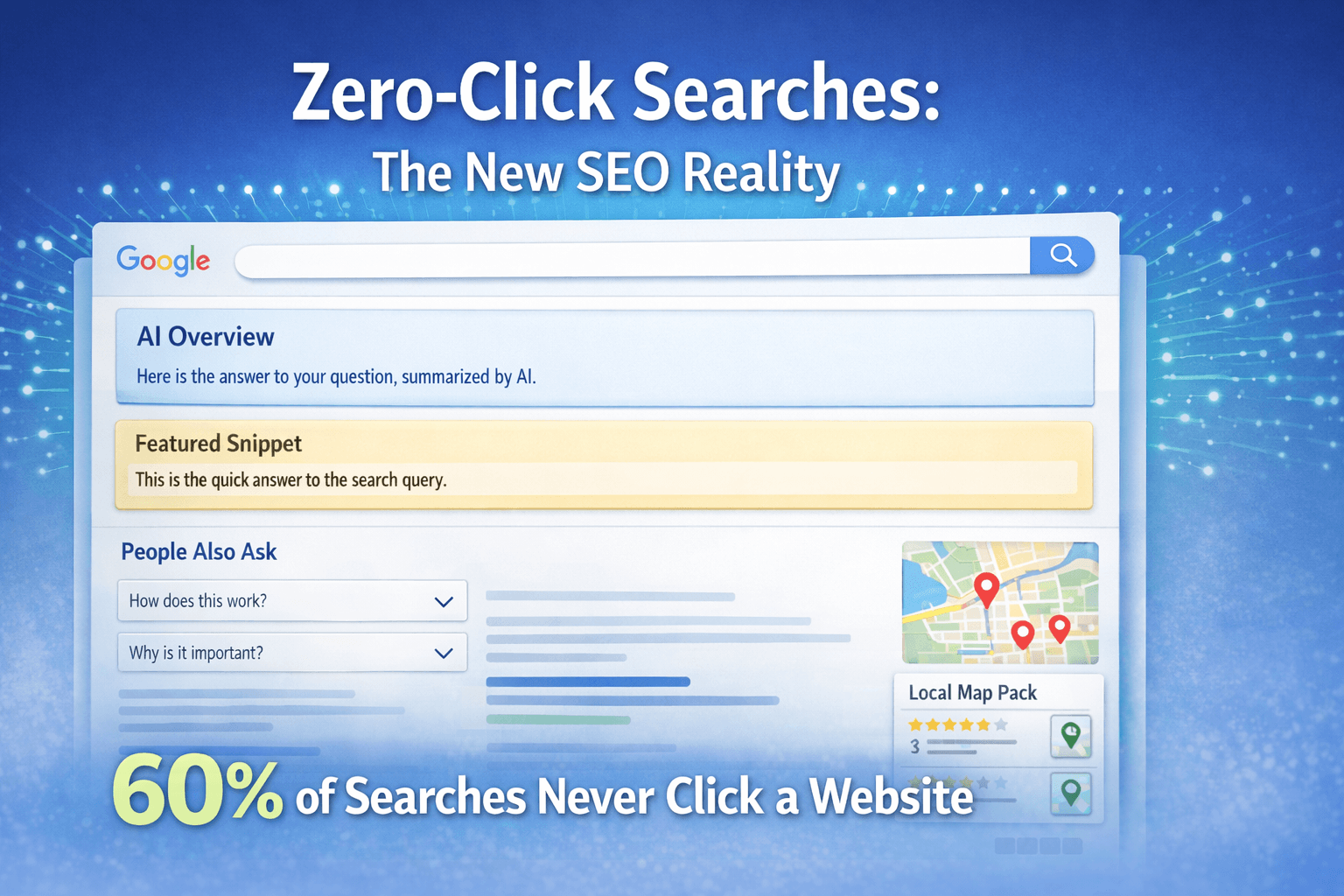
In 2026, a significant portion of searches end without a user ever visiting a website. Instead, search engines provide answers directly on the results page through AI summaries, featured snippets, knowledge panels, and local listings.
Studies now suggest that roughly 60% of searches end without a click, and on mobile devices that number can reach over 75%. Search engines have evolved from acting like directories that send users to websites into platforms that deliver answers immediately.
For businesses and marketers, this doesn’t mean SEO is dying. It means the strategy must evolve. Visibility, authority, and inclusion in AI-generated answers are now just as important as website traffic.
Understanding how zero-click searches work and how to optimize for them is essential to staying competitive in modern search.
What Is a Zero-Click Search?
A zero-click search occurs when a user enters a query into a search engine and receives the information they need directly on the results page without clicking through to a website.
Instead of sending users away, search engines increasingly deliver answers instantly through enhanced search features.
These results can include featured snippets, AI-generated summaries, knowledge panels, local map packs, or quick-answer boxes that present information clearly at the top of the page.
For users, this means faster answers. For businesses, it means the goal is no longer just clicks, but being the trusted source that search engines highlight.
Key Search Terms Every Business Should Understand
Understanding modern search terminology helps businesses recognize how visibility works in an AI-driven search landscape.
SERP (Search Engine Results Page)
The SERP is the page displayed after a user submits a search query. It contains both traditional organic results and enhanced features like AI summaries, featured snippets, and local listings.
AI Overviews
AI Overviews are summaries generated by search engines using artificial intelligence. These summaries combine information from multiple sources and present a concise answer directly on the search results page.
Position Zero
Position Zero refers to the featured snippet or answer box that appears above the standard first search result. This location often receives significant visibility and brand recognition.
Generative Engine Optimization (GEO)
Generative Engine Optimization focuses on optimizing content so AI systems and generative search tools recognize it as a reliable source and reference it when generating answers.
Why Zero-Click Searches Are Increasing
Several technological and behavioral changes are driving the rise of zero-click searches.
AI-Powered Search Experiences
Search engines now use artificial intelligence to analyze and summarize information across multiple websites. These AI-generated summaries provide quick answers without requiring users to visit individual pages.
For many informational searches, these summaries appear prominently and reduce the need for users to click through to other sites.
Mobile Search Behavior
Mobile users often want quick answers with minimal effort. When a search result already provides the information they need, opening another website can feel unnecessary.
This convenience has significantly increased the number of searches that end directly on the results page.
Local Search Results
Local searches often trigger map-based results known as the Local Pack. These listings provide phone numbers, directions, reviews, and business hours immediately.
For many users, this information is enough to make a decision without visiting the business website.
How Businesses Can Succeed in a Zero-Click Environment
Although zero-click searches reduce traditional website traffic, they also create new opportunities for visibility and authority.
Businesses that optimize their content correctly can still dominate search results and build brand recognition.
Capture Featured Snippets
Featured snippets are short answers that search engines display prominently at the top of the results page.
These snippets typically come from content that provides clear, concise answers to common questions.
How to Optimize for Snippets
Place a clear definition or answer immediately after a heading that includes the search question.
Aim for a 40–60 word explanation that directly answers the question without unnecessary filler content.
This structure makes it easier for search engines to extract and display your content in featured snippets.
Create Content That AI Cannot Fully Summarize
AI systems excel at summarizing factual information, but they struggle with unique perspectives and real-world experiences.
Content that includes original insights, case studies, research, or detailed analysis is more difficult for AI to compress into a simple summary.
This type of content encourages users to click through for deeper information.
Examples of effective strategies include:
- Sharing real business case studies
- Providing original data or surveys
- Offering strategic insights or expert commentary
- Building interactive tools or calculators
When users want deeper understanding, they are more likely to visit your website.
Use Structured Data (Schema Markup)
Structured data helps search engines understand the content and context of your website.
Schema markup allows you to label specific elements such as reviews, FAQs, services, products, or recipes. This helps search engines display your information directly within search results.
One particularly effective approach is implementing FAQ schema, which can allow your questions and answers to appear directly in search listings.
This increases your visibility and reinforces your authority even when users do not click through.
Measuring SEO Success in the Zero-Click Era
Traditional SEO metrics focused heavily on clicks and website visits. While these still matter, they are no longer the only indicators of success.
Businesses should now monitor broader visibility metrics.
Answer Inclusion Rate
Track how often your content is referenced in AI summaries, featured snippets, and other search enhancements.
Being cited as a source signals authority and increases brand trust.
Branded Search Volume
When users repeatedly see your brand in search results, they often begin searching for your business by name.
An increase in branded searches indicates strong brand recognition.
SERP Real Estate
Instead of focusing only on ranking position, analyze how many search features your business occupies.
These features may include:
- Featured snippets
- Local Pack listings
- People Also Ask results
- Knowledge panels
- AI-generated summaries
Owning multiple placements on the search results page increases visibility even if fewer users click through.
Important Trends Shaping Search Behavior
Understanding the broader trends behind zero-click searches helps businesses build stronger long-term strategies.
AI Citations Are Becoming the New Backlinks
Being referenced by AI-generated search answers builds credibility and reinforces authority.
Just as backlinks once signaled trust, AI citations are increasingly becoming an indicator of authority in search.
Search Engines Are Becoming Destination Platforms
Many users now remain within the search platform itself rather than navigating to external websites.
This shift means businesses must focus on search visibility and brand presence, not just website traffic.
Providing Value Before the Click
Successful content strategies now give users immediate answers while still offering deeper insights for those who want to learn more.
Provide clear explanations directly in search snippets, but reserve advanced strategies, tools, and detailed guides for the full article.
This encourages users to click when they want more depth.
The Future of SEO in an AI-Driven Search World
Zero-click searches do not eliminate the need for SEO. Instead, they redefine what success looks like.
Modern SEO is about becoming the trusted source that search engines rely on when generating answers.
When your content is consistently referenced in AI summaries, featured snippets, and search enhancements, your brand gains visibility and authority across the entire search ecosystem.
Even if fewer users click immediately, those who do visit your site are often more qualified and ready to take action.
Businesses that adapt their strategy to prioritize authority, structured data, and high-quality content will remain competitive as search continues to evolve.
The goal is no longer just to rank. It is to become the source that search engines trust to deliver answers.
What is a zero-click search?
A zero-click search occurs when a user finds the information they need directly on the search results page without clicking through to a website.
Why are zero-click searches increasing?
Zero-click searches are increasing due to AI-powered summaries, featured snippets, and search features that deliver answers instantly within the search results.
Do zero-click searches hurt SEO?
They change how SEO success is measured. Instead of focusing only on traffic, businesses must also focus on visibility, authority, and inclusion in AI-generated search results.
How can businesses optimize for zero-click searches?
Businesses should create concise answers for common questions, implement structured data, produce expert content, and aim to appear in featured snippets and AI summaries.
What is Generative Engine Optimization (GEO)?
Generative Engine Optimization focuses on optimizing content so AI search tools and language models reference it when generating answers.